

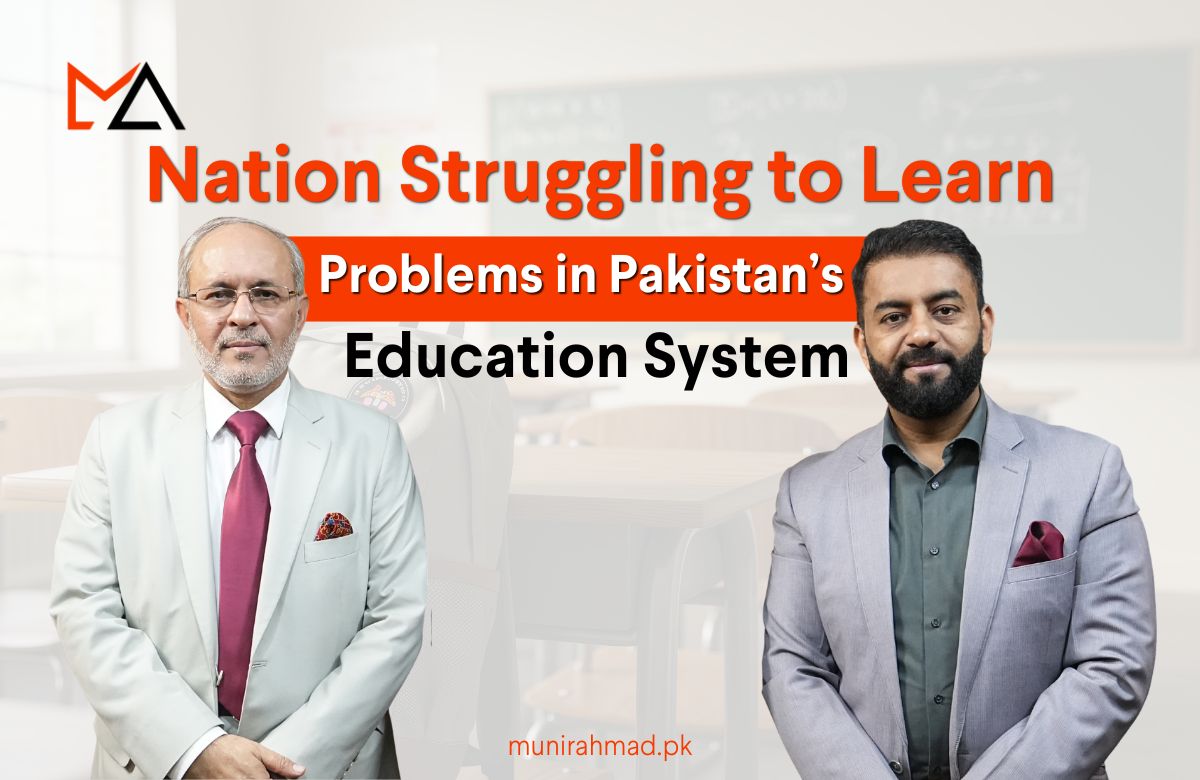
Insights From Dr. Khalid Mahmood & Munir Ahmad
Pakistan has millions of bright and hardworking children. They go to school every day, carry heavy bags, score high marks, and dream of a better life. But when they grow up, many feel confused, unprepared, and lost. They have degrees, but not the real skills they need for the world.
Why is this happening?
In this podcast, Munir Ahmad talks with Dr. Khalid Mahmood, Pro Vice-Chancellor of the University of the Punjab. With more than 35 years of experience, Dr. Khalid explains the true reasons behind Pakistan’s failing education system.
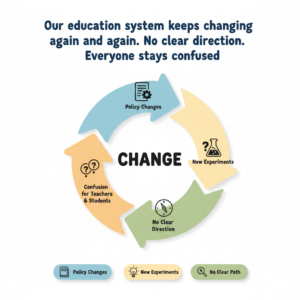
Our System Keeps Changing Without Direction
One of the first things Dr. Khalid mentions is that Pakistan has never decided what kind of education system it actually wants. Every government introduces a new plan. One year, we followed the UK. Next year, we follow the US. Then, someone tries to create a local model. When governments change, the old system is removed and a new one is forced.
Because of this, teachers, parents, and students remain confused. Children grow up in a system where nothing is stable. Dr. Khalid says Pakistan has spent decades doing experiments instead of building one simple, strong system for everyone.
Education Was Never Given Real Importance
In strong countries, education gets the biggest budget. Teachers are trained well, and schools have proper facilities. But Pakistan has never put education first. It receives very little money. Most government schools do not have enough teachers, clean classrooms, or proper learning tools.
Dr. Khalid believes that the biggest reason for failure is that Pakistan has not invested in education. Without money, training, and planning, no country can rise.
Children Carry Heavy Bags but Learn Little
Munir shares a sad but common example. A small child weighing 16 kg carries a school bag that weighs almost the same. Even very young children are given difficult books, long chapters, and too much homework. They memorize lessons without understanding. This “ratta system” gives high marks, but no real learning.
Because of this pressure, children lose the joy of learning. They become tired, stressed, and disconnected from real life. Dr. Khalid says a child should see life, explore, play, and learn naturally — not spend every hour buried in books.
Home and School Teach Opposite Things
Another big issue is that children receive two different types of training. At home, many parents allow full freedom and do not set rules. Children shout, run, and do whatever they want. But at school, the same child is expected to sit quietly, follow rules, and behave in a strict environment.
This causes confusion. The child does not know which behavior is correct. Dr. Khalid explains that both education and tarbiyyah (good character and manners) should happen together. Without tarbiyyah, education becomes weak.
Government Schools Are Falling Apart

There was a time when government schools were the b
est in Pakistan. Many successful people studied there. But today, these schools are in very bad shape. Buildings are old, teachers are untrained, and the system is not taken seriously. Many schools have been outsourced because the government says it cannot manage them.
Dr. Khalid strongly disagrees with this. He believes the government should fix the schools, not run away from them. Education is the responsibility of the state, and giving it away makes the problem even worse.
Teachers Are Not Being Trained Properly
A strong education system needs strong teachers. But many teachers, especially in government schools, refuse to attend training or upgrade their skills. There is no pressure from higher authorities, and no motivation to improve. Dr. Khalid believes this happens because leadership is weak. He says teachers will not improve on their own unless the system guides them.
Watch the Full Podcast
You can watch the full discussion here:
 https://youtu.be/QmSicFrQZA0?si=I7OZomBn3BDhMDaP
Too Many Different School Systems
Pakistan does not have one learning path. We have Cambridge, Oxford, private boards, government boards, madrassas, and many new types of schools. Every system teaches something different. This divides society and creates inequality.
Dr. Khalid believes we need one basic curriculum for the whole country. Every child, rich or poor, should learn the same basic English, Urdu, Math, and Science. After that, students can choose special fields, but the foundation must be equal for everyone.
Universities Are Struggling Too
When students reach universities, the problems become even more visible. Many courses are outdated. Research is rare because universities have low budgets. Modern skills are not taught properly. Students leave with degrees but without confidence or real abilities. Even those who score 1100 out of 1100 struggle to speak, write, or solve simple problems.
This shows that marks do not reflect true learning.
Check out our related interesting articles:
- Sunnah Meets Science: Hijama in Pakistan | Dr. Faiza & Munir
- Dubai National Day 2025 | Vision, Innovation & Growth
- Scope of Information Technology in Pakistan | Munir Ahmad
- 7 Leadership Tips to Inspire Your Team By Munir Ahmad
Law and Discipline Are Missing
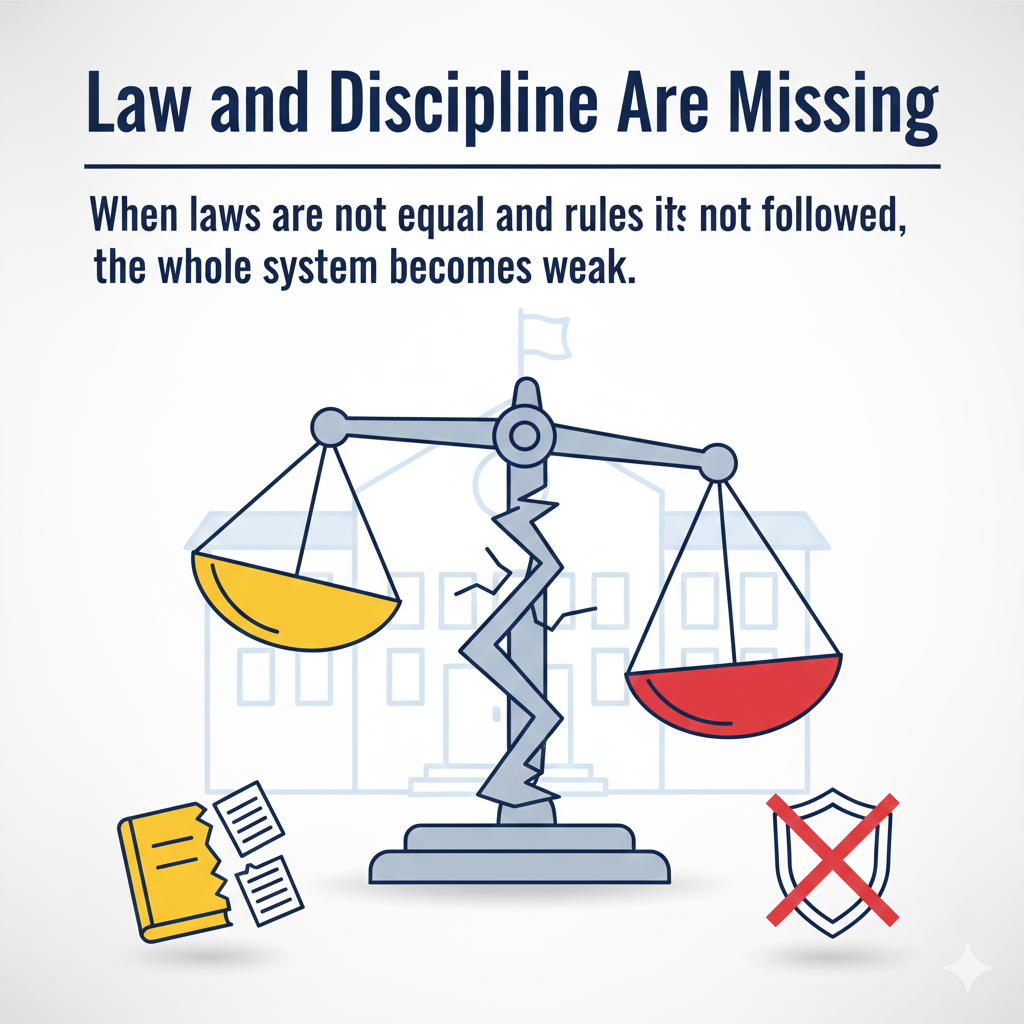
Munir and Dr. Khalid both agree that Pakistan needs strong law and equal rules. If one person gets away with breaking rules while another gets punished, the system becomes weak. Whether in universities, schools, or society, rules must apply to everyone equally. Only strong discipline can lift a nation.
The Future Could Be Worse If We Don’t Act Now
A shocking truth is that more than 2.6 crore children in Pakistan do not go to school. In 15 years, they will grow up with no skills and no education. This can create huge problems — more crime, more unemployment, and more chaos.
With AI and technology taking over the world, the future will be even harder for children who are not educated or trained.
What Needs to Change
Dr. Khalid says the solutions are simple: Pakistan must spend more money on education, train teachers, reduce pressure on children, build character, fix government schools, and create one clear system for everyone. Without these steps, improvement is impossible.
Final Thoughts
Education is the key that opens the doors of the world. It brings jobs, confidence, skills, and respect. High marks mean nothing if a child cannot think, speak, or understand. Pakistan needs both education and tarbiyyah. Only then can our children compete with the world, and only then can our nation truly learn and rise.