

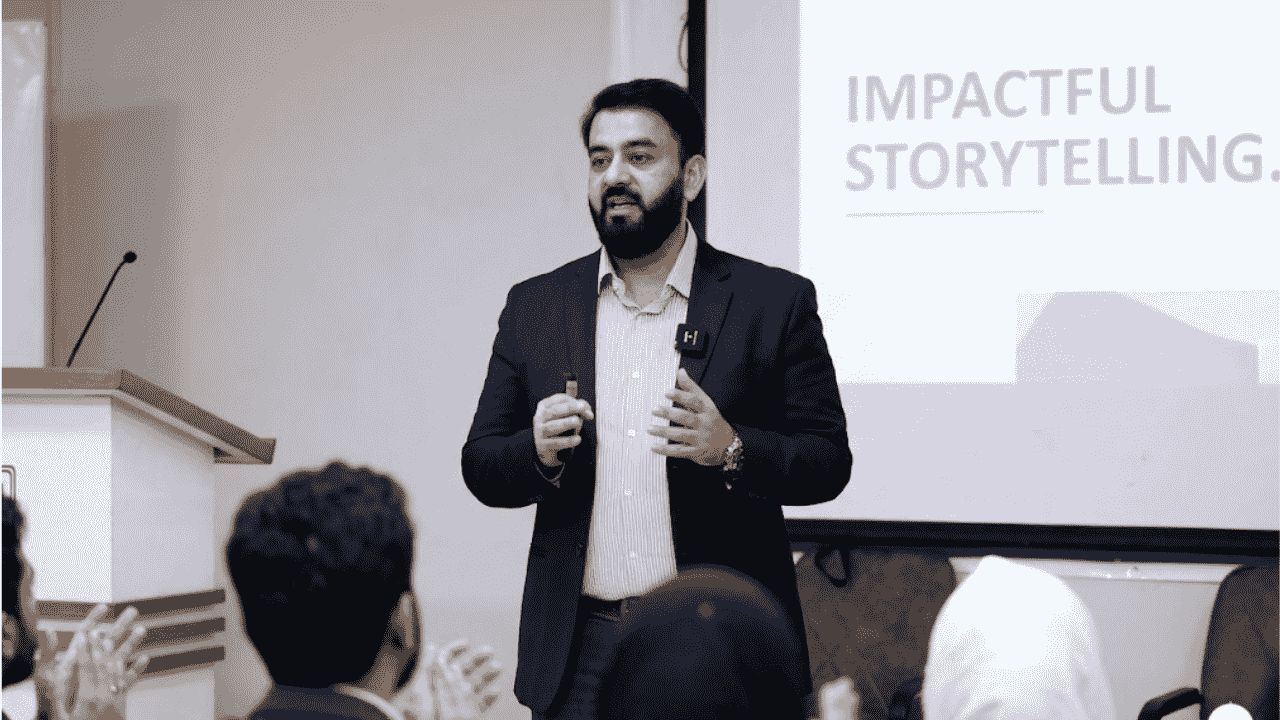
You are sitting in the back row of a conference hall. The lights go low. Someone walks on stage, takes the mic, and starts speaking. Within three minutes, you are either leaning forward or checking your phone.
That reaction has very little to do with the stage, the mic, or even the topic. It has everything to do with what type of speaker just walked out, and whether their style matched what that room actually needed.
This is a question I get asked constantly — from corporate HR managers building annual conferences, from event planners handling university convocations, and from entrepreneurs putting together leadership summits.
Most people use these two terms interchangeably. That is the first mistake.
They are two distinct roles. They serve different purposes. They produce different outcomes. And booking the wrong one — even a genuinely talented wrong one — can leave your audience flat, your event forgettable, and your budget wasted.
Let me break this down the way I would, sitting across from you over chai.
See Google reviews




Motivational Speaker Meaning: What Does This Role Actually Do?
A motivational speaker’s primary job is emotional transformation. They are there to shift how people feel about themselves, their potential, and what is possible for them.
The content is typically personal. Heavy on story. Built around struggle, failure, comeback, and breakthrough. The speaker draws the audience into an emotional experience, creates a peak moment of inspiration, and leaves people with a feeling of “I can do this.”
Think of the sessions you have seen at youth development events, corporate wellness days, school and university functions, or personal growth seminars. The speaker talks about their journey. They share a moment of deep loss or failure. They describe the turning point. They finish with something that feels like a call to action — but the call is mostly internal. “Believe in yourself. Take the leap. Your potential is limitless.”
That is motivational speaking at its core.
And when done well, it is genuinely powerful. I have seen entire rooms of 300 people brought to silence — then brought to their feet — by a single story told the right way. That is nothing. That is a real skill.
But here is what motivational speaking is not designed to do: it does not give your team a framework for improving their sales conversion rate. It does not give your leadership team a decision-making model. It does not walk your HR department through a retention strategy.
Emotion without direction is energy without a container. It burns bright and then dissipates.
Keynote Speaker Meaning: Where Content Meets Authority
A keynote speaker sets the intellectual and strategic tone for an event. The word “keynote” comes from music — the foundational note that defines the key of a composition. Everything else is built around it.
A keynote speaker is typically a recognized expert, industry leader, or thought leader in a specific field. Their job is to deliver a central idea or argument that frames the entire event. They bring research, data, case studies, and a point of view that challenges or advances the thinking of the audience.
When a technology company brings in a keynote speaker for their annual summit, they want someone who can speak to where the industry is heading, what it means for the business, and what decisions leaders need to make right now. The speech is informative. It is credible. It is forward-looking. It may be compelling and engaging — but its primary function is to inform, orient, and provoke strategic thinking.
The audience leaves with something they can act on specifically. A concept. A framework. A new perspective on their industry. A decision they now feel equipped to make.
The Core Differences: Side by Side
Let me put this simply, because I think this is where the real clarity comes from.
A motivational speaker leads with emotion and follows with inspiration. A keynote speaker leads with insight and follows with direction.
The motivational speaker’s measure of success is how the audience feels when they leave. The keynote speaker’s measure of success is what the audience thinks and does differently after they leave.
One is heart-first. The other is mind-first.
That does not make one better than the other. It makes them tools designed for different jobs.
The problem is that most event organizers, especially in Pakistan, do not distinguish between the two when briefing a speaker or when evaluating whether a booking was worth it. They just ask “was it good?” without asking “good for what?”
What About Corporate Speakers and Public Speakers?
These terms add more layers to the conversation.
A corporate speaker is someone hired specifically for corporate environments — leadership conferences, team off-sites, annual reviews, and training days. They could be a motivational speaker. They could be a keynote speaker. They could be a trainer or facilitator. The word “corporate” describes the audience, not the function.
A public speaker is simply someone who speaks to audiences professionally. It is the broadest category. Every motivational speaker and every keynote speaker is a public speaker by definition.
What matters is not the label. What matters is the function — what are they being hired to do, for whom, and to what end.
How to Know Which One Your Event Needs
I want to give you a practical way to figure this out, because I have advised enough event planners and company heads to know that this decision is made poorly far too often.
Ask yourself one question: what do you want your audience to do differently on Monday after this event?
If the answer is “I want them to feel re-energized, reconnected to their purpose, and motivated to push through challenges,” you need a motivational speaker.
If the answer is “I want them to understand a new strategy, shift their thinking about a business problem, or walk away with a framework they can implement,” you need a keynote speaker.
If the answer is “I want both,” and this is the most honest answer most of the time, then you need someone who can do both. And that person is rarer than either category alone.
The Speaker Who Can Do Both: What to Look For
Here is something the event industry does not talk about enough. The best speakers at the highest-level events — whether that is a global business conference in Dubai or a corporate leadership summit in Karachi — are people who have mastered both dimensions.
They come with credibility, data, and a real point of view. But they deliver it with story, emotion, and energy. They make the audience feel the importance of the insight, not just understand it intellectually.
This is the standard I hold myself to when I take the stage. Whether I am speaking about business growth, digital strategy, or personal development, the goal is never just to motivate without substance or to inform without making people feel something. The two must work together.
When you are evaluating a speaker for your event, look at their track record. Not just testimonials — although those matter. Look at who hired them and for what purpose. Look at whether they have real expertise in an area your audience respects. Look at whether they can speak to your specific context rather than delivering a generic “believe in yourself” narrative that could apply to any room in any country.
Common Mistakes Event Organizers Make
The first mistake is booking purely based on social media presence. A speaker with a large following is not necessarily a speaker who can hold a corporate room for 45 minutes and leave people with something actionable.
The second mistake is not giving the speaker enough context about the audience. A good speaker customizes their content. If you give them a brief that just says “we need someone inspiring,” you will get a generic inspiring speech. If you say “our sales team has missed targets for two quarters and morale is low,” a good speaker can build something specific and useful around that.
The third mistake is treating the speaking slot as entertainment rather than an investment. The speaking slot at your conference is your highest-leverage communication moment. It is where you have the most people, the most attention, and the most opportunity to shift something important. Treating it like a decoration is expensive.
What Fees Tell You (and What They Don’t)
Speaker fees in Pakistan range enormously, from someone who will come and speak for free to international keynote speakers who command several thousand dollars per engagement.
Fee is not a reliable indicator of quality or fit. Some of the most expensive speakers are powerful on a global stage but will not connect with a Pakistani corporate audience. Some of the most underpriced speakers are extraordinary communicators who simply have not yet built the visibility their talent deserves.
What you should pay for is documented results, clear expertise, and the ability to deliver specifically to your audience’s needs. Ask for a brief conversation before booking. A speaker who cannot articulate what they will deliver and how it connects to your audience’s specific situation is a risk, regardless of their fee.
Motivational Speaking in Pakistan: The Gap That Exists
I want to say something honest here, because I think it serves this audience better than flattery.
The motivational speaking space in Pakistan has grown enormously over the last decade. That growth has been mostly healthy — more people are being exposed to ideas about mindset, growth, and potential. That matters.
But a significant portion of what gets labeled as motivational speaking in Pakistan is surface-level. High energy. Loud delivery. Borrowed quotes from international speakers. No real expertise behind the message.
The audiences, especially corporate audiences and entrepreneurs, are getting smarter. They can tell when a speaker has lived through what they are talking about versus when someone has assembled a speech from YouTube videos and self-help books.
The demand is increasingly for speakers who bring both — the energy that moves a room and the depth that earns respect. That is the direction the market is heading, and it is the right direction.
Why Your Brand Needs to Understand This Distinction Too
If you are a business owner, entrepreneur, or professional building your own brand, this conversation matters to you in a different way.
The question is not just who to hire. The question is also who you want to position yourself as.
If you are building thought leadership in your industry, being known as a keynote speaker carries more authority than being known as a motivational speaker. Keynote speakers are seen as experts. Motivational speakers are seen as inspirers. Both have value, but they open different doors and command different positioning in the market.
If you are thinking about personal branding and want to build authority in your field through speaking, start by getting clear on what expertise you are bringing to the stage. That expertise is the foundation. The delivery and the energy come on top of it — not instead of it.
FAQs: What People Also Ask
Can one person be both a motivational speaker and a keynote speaker?
Yes. Many experienced speakers work in both capacities depending on the event. The difference is in how they frame the engagement, what content they prepare, and what outcomes they are contracted to deliver.
Which type of speaker is better for a corporate event?
It depends on the goal. For team motivation and culture events, a motivational speaker works well. For strategy conferences, leadership summits, or industry events, a keynote speaker is usually the right call.
How do I find a good keynote speaker in Pakistan?
Look for someone with verifiable expertise in the topic your audience cares about, a track record of speaking at respected events, and the ability to customize content to your specific context. Social following is not a substitute for these criteria.
Is a motivational speaker worth the investment?
When matched to the right event and audience, yes. When booked without a clear purpose or fit, it becomes an expensive entertainment slot that does not move the needle on anything.
What should I ask a speaker before booking them?
Ask what they will cover specifically, how they customize for different audiences, what outcomes their sessions typically produce, and for references from similar events they have spoken at.
Final Thoughts
The difference between a motivational speaker and a keynote speaker is not a technicality. It is the difference between an event that leaves people feeling pumped and an event that leaves people equipped.
Both have their place. Neither is universally superior. The mistake is treating them as the same thing — or treating the choice as unimportant.
If you are planning an event, take fifteen minutes to get clear on what you actually want your audience to walk away with. That clarity will tell you exactly what kind of speaker you need.
And if you are building your own platform as a speaker, get honest about what you are bringing to the stage beyond energy. Expertise is what builds a long-term speaking career. Delivery is what makes expertise land.
I have spoken at corporate events, university summits, entrepreneurship conferences, and leadership workshops across Pakistan and internationally. Every time, the brief that produces the best result is a specific one — not “we need someone inspiring,” but “here is our audience, here is their challenge, here is what we want them to do differently.”
That specificity is where real value lives.
If you want to explore what the right speaker or the right motivational speaker engagement looks like for your next event, let’s have that conversation.