

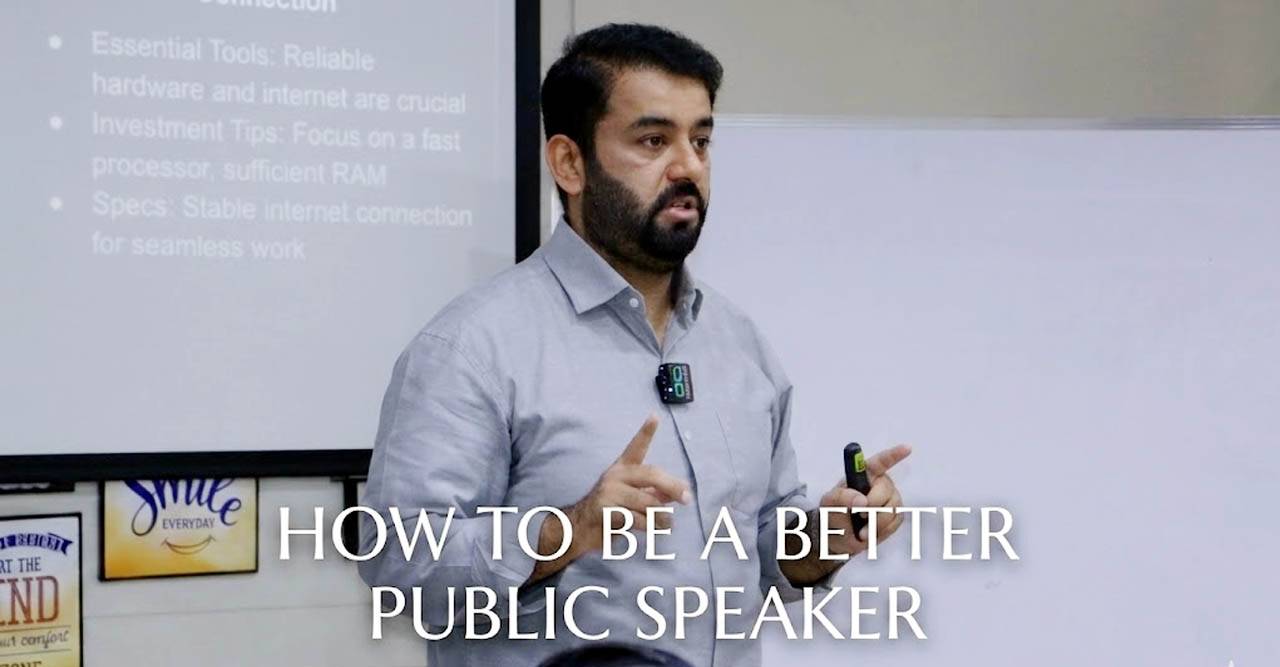
Most people would rather take a root canal than speak in front of a crowd. That is not an exaggeration, public speaking consistently ranks as one of the top fears across cultures and age groups. But here is what separates the people who stay stuck from the ones who go on to lead rooms, close deals, and command real authority: they found someone who showed them how confidence is actually built, not just told them to “believe in yourself.”
A motivational speaker for public speaking does something different from a generic coach or a YouTube tutorial. They have walked the stage themselves. They know what it feels like when your voice shakes, when your mind goes blank three sentences in, and when the room feels like it is staring through you rather than at you. That lived experience is exactly why working with the right speaker changes everything.
If you are a business owner, entrepreneur, or professional who knows that your ideas deserve a bigger audience, this is for you.
See Google reviews
Why Public Speaking Fear Goes Deeper Than Most People Admit
Before anyone can fix a problem, they need to understand what is actually happening underneath it.
Fear of public speaking, formally called glosso phobia, is not laziness or lack of preparation. According to the National Institute of Mental Health, around 73% of people experience some level of public speaking anxiety. The brain processes standing in front of an audience similarly to a physical threat. Your heart rate climbs. Your palms sweat. Your working memory, the part responsible for keeping your talking points organized, takes a hit right when you need it most.
What this means practically is that telling yourself “just relax” is about as useful as telling someone with a broken leg to walk it off.
A skilled motivational speaker for public speaking addresses this at the root. The work is psychological before it is technical. You cannot teach vocal delivery to someone whose nervous system is in full panic mode. The confidence has to come first, and that is exactly what a good speaker-trainer focuses on.
What a Motivational Speaker for Public Speaking Actually Does
There is a common misconception that hiring a motivational speaker means sitting in a room for two hours listening to someone tell inspiring stories. That can be part of it, but the real value is in what shifts inside you after the session ends.
Here is what the process actually looks like when done right.
Breaking the Identity Block First
The biggest reason people stay stuck at “average” when it comes to speaking is not skill — it is identity. They have told themselves the story “I am just not a natural speaker” so many times that it has become true for them. A motivational speaker who understands this works on the belief layer before touching any technique.
This is not fluffy mindset talk. When you genuinely start seeing yourself as someone who can hold a room, your posture changes, your eye contact holds longer, and your voice naturally carries more authority. The technique follows the belief.
Practical Stage Mechanics — The Stuff That Actually Works
Once the mental block starts loosening, the technical work begins. This includes:
- Breathing patterns that stabilize your voice under pressure
- How to use silence strategically instead of filling it with “um” and “uh.”
- Where to stand and how to move so the audience stays engaged
- How to structure a talk so people remember your core message three days later
- Eye contact techniques that build trust without making anyone uncomfortable
These are not abstract concepts. They are learnable, repeatable skills.
Handling the Room When Things Go Off-Script
No one talks about this enough, but some of the best public speaking moments happen when something goes wrong, and the speaker handles it well. A motivational speaker for public speaking prepares you for the real scenarios: the technical glitch, the difficult question from the floor, the moment you lose your place, and the hostile audience member.
How you handle those moments is what people actually remember.
The Role of Personal Branding in Public Speaking Confidence
Here is something most speaking coaches skip over entirely: your personal brand and your public speaking confidence are directly connected.
When you know exactly who you are, what you stand for, and what makes your perspective worth listening to, walking onto a stage feels completely different. The anxiety of “what will they think of me” gets replaced by “I know what I am here to say.” That clarity is a confidence multiplier.
This is why personal branding work and public speaking development belong together. You build the brand, you own the message, and then delivering that message in front of a live audience becomes the natural next step, not a terrifying leap.
Think about the speakers you find most compelling. They all have this quality: a strong, clear point of view that feels theirs distinctly. That does not happen by accident. It is the result of deliberate work on who they are and what they represent.
How Munir Ahmad Approaches This as a Motivational Speaker
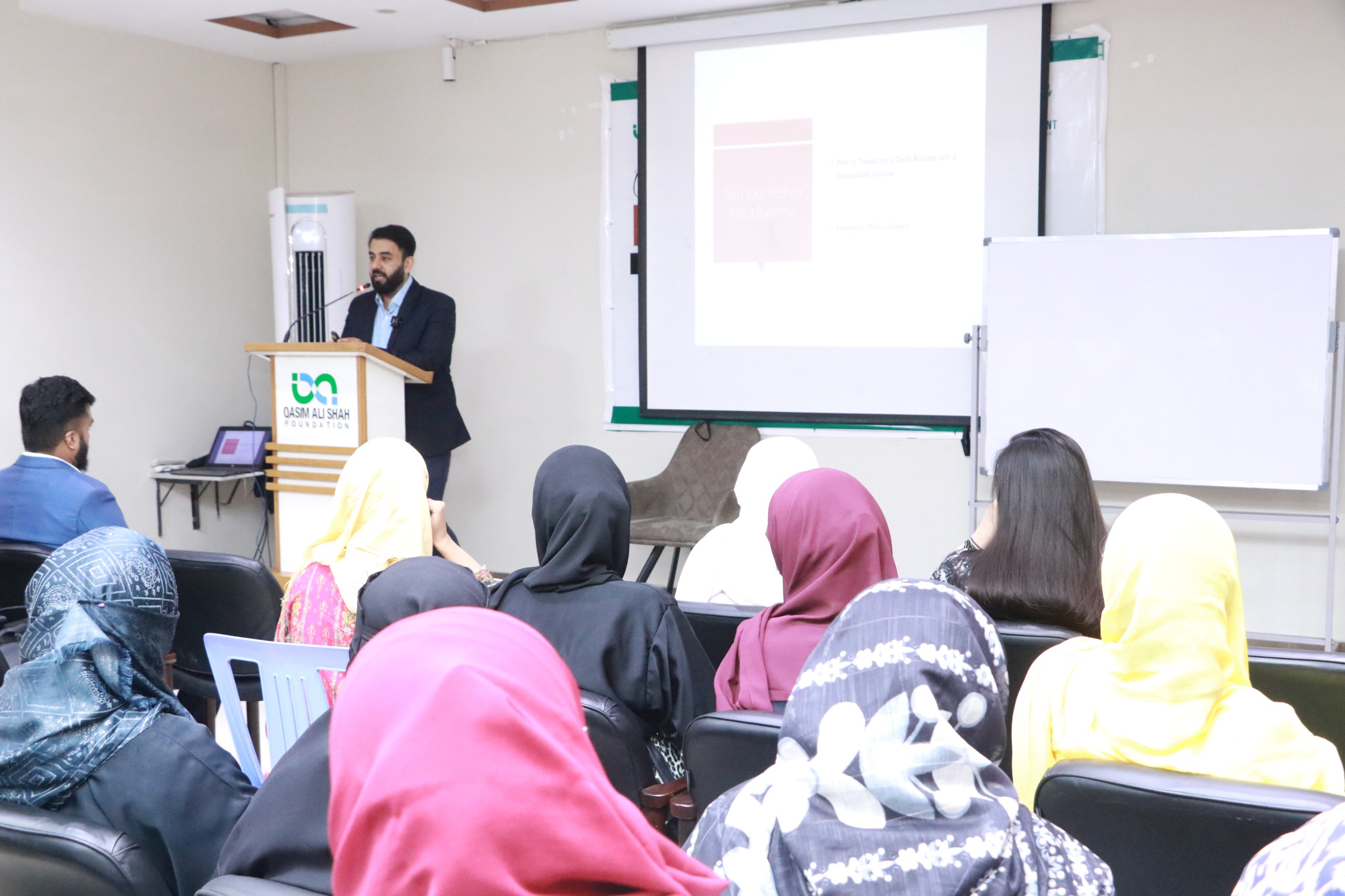
I have been in front of audiences across Pakistan and internationally for over a decade. The sessions that create real transformation are never the ones where I simply deliver content, they are the ones where the person in the room has a shift in how they see themselves.
The most common thing I hear before a speaking session is some version of “I have so much to say, but I do not know how to say it.” That gap between what you carry and what you actually express is where most of the work happens.
What I bring to this is not just a framework off a shelf. It is 20+ years of being in the room with business owners, teams, and entrepreneurs at different stages, people who needed to pitch, present, lead, and persuade. The patterns are consistent. The fear is real. And the breakthroughs, when they happen, are fast.
If you are curious about working together, the motivational speaker page walks through what that looks like in practice.
Building Confidence Step by Step: A Realistic Timeline
One of the most unhelpful things in the personal development space is the implication that transformation is instant. It is not. But it is also not as slow as most people fear.
Here is a realistic framework for what progress looks like:
Diagnosis and Identity Work: Understanding your current patterns, identifying the specific triggers of your anxiety, and beginning to shift the story you tell yourself about who you are as a communicator.
Foundational Mechanics: Breath, posture, voice, structure. Practicing in low-stakes environments to build the habit before the pressure hits.
Simulated High-Stakes Practice Recording yourself, presenting to small groups, getting feedback in real time, and learning to self-correct without spiraling.
Live Application: Taking what you have built into actual presentations, meetings, pitches, or events. Debriefing afterward to lock in the learning.
Progress is rarely linear. There will be a session that feels like a breakthrough and one that feels like you went backwards. Both are part of the process.
Public Speaking in the Age of Personal Brand Authority
The world has changed. Attention is the scarcest resource in any industry, and the professionals who can capture and hold that attention, in a room, on a stage, in a video, on a podcast, have a genuine competitive edge.
Public speaking is no longer just for politicians and keynote celebrities. It is how business owners attract high-value clients. It is how professionals get promoted. It is how entrepreneurs build the kind of trust that makes people buy without needing to be sold to.
If you are building a personal brand, speaking is not optional. It is the accelerant.
Here is the research from Toastmasters International on the long-term career impact of communication skills — their data across decades of members is some of the most consistent evidence available on what public speaking development actually does for professional outcomes.

People Also Ask
Can a motivational speaker actually help with public speaking fear, or is it more for general inspiration?
A motivational speaker who specializes in public speaking development does both — they shift your mindset around what is possible and give you specific, practical tools for the stage. The best ones do not separate the two.
How long does it take to become a confident public speaker?
For most people, meaningful progress happens within four to six weeks of consistent, guided practice. Full transformation — where you genuinely enjoy speaking — often takes six months to a year of real-world application.
What is the difference between a speaking coach and a motivational speaker?
A speaking coach focuses primarily on technique. A motivational speaker also addresses the psychological and identity barriers that technique alone cannot fix. Ideally, you want someone who does both.
Is public speaking training worth it for someone who only presents internally at work?
Yes — often more so than for people who present externally. Internal presentations directly affect how you are perceived for promotions, leadership roles, and influence within your organization.
How do I find the right motivational speaker for public speaking near me?
Look for someone with demonstrated stage experience across different contexts, genuine client results, and an approach that addresses mindset alongside mechanics. Credentials matter less than track record.
Final Thoughts
Confidence on stage does not come from pretending the fear is not there. It comes from building a foundation solid enough that the fear does not stop you. That is the work — and it is absolutely learnable.
Whether you are preparing for your first keynote, trying to show up more powerfully in sales presentations, or simply wanting to stop dreading the next team meeting where you have to speak up, the path forward is the same. Find the right guide, do the real work, and stop waiting until you feel ready.
You get confident by doing it, not the other way around.
If this resonated and you want to take the next step, explore what personal branding can do for your authority — because the message and the messenger have to grow together. And when you are ready to work directly with someone who has been on both sides of this, the motivational speaker page is the right place to start.