

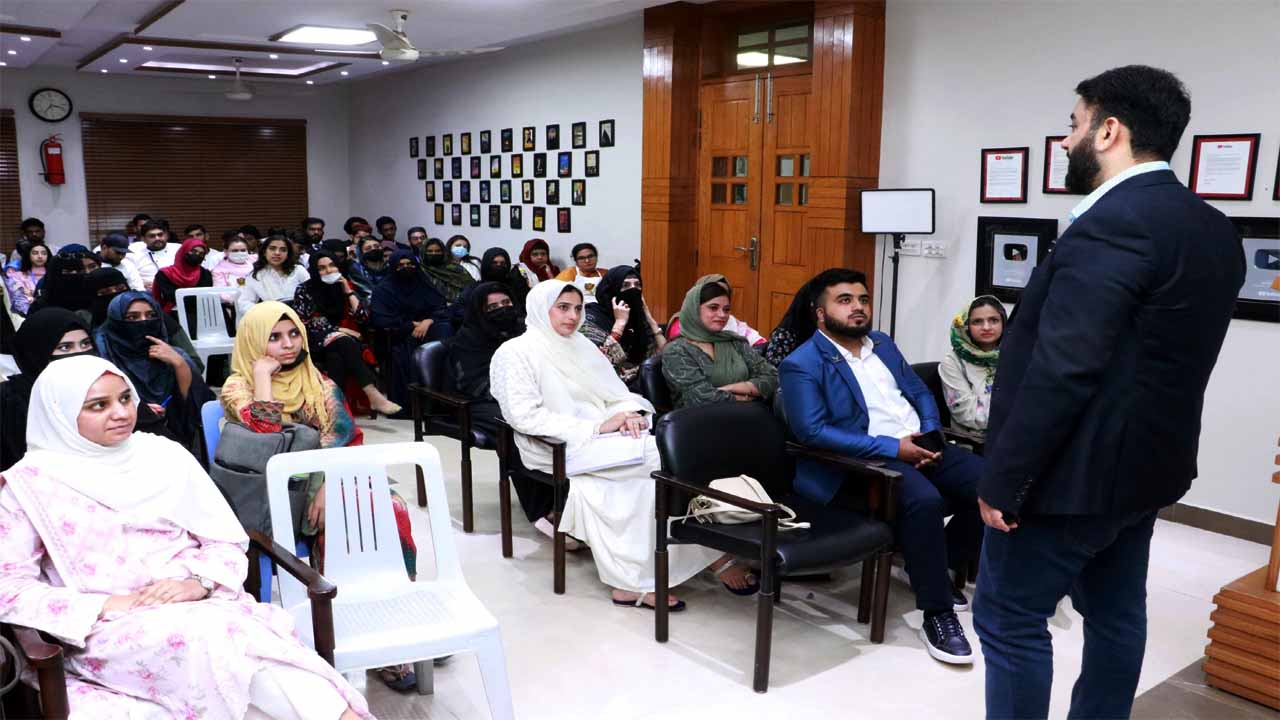
Last year, a university in Lahore invited me to speak at their entrepreneurship workshop. The organizer told me the same thing I hear at almost every educational event: “Our students are talented, but they lack confidence and direction. We need someone who can change that in one session.”
That is a real challenge. And it is also the wrong way to frame it.
One session does not change a student’s trajectory. But one session, done right, can crack something open — a belief they were holding too tightly, a fear they thought was permanent, a story they kept telling themselves about why they were not ready yet. That crack is where everything useful enters.
I have spoken at Motivational Speaker for Student Workshops, university convocations, youth summits, and entrepreneurship bootcamps across Pakistan. And the gap between events that produce genuine impact and events that just produce applause almost always comes down to one thing: how thoughtfully the organizer approached the decision to hire a speaker in the first place.
This article is for the people making that decision — university event coordinators, department heads, student society presidents, college principals, and HR managers running graduate development programs. If you are trying to hire a motivational speaker for a student workshop and you want to actually move the needle on something real, read this carefully.
See Your Google Review
Why Student Workshops Need a Different Kind of Speaker
Corporate audiences come to events with a professional context already in place. They have a job, a team, targets, and a boss. When a speaker addresses leadership or performance, the audience already has a frame of reference for applying what they hear.
Students do not have that yet. They are operating in a space that is simultaneously full of possibility and full of uncertainty. They have not failed in a real professional context. They have not managed people, missed revenue targets, or had to rebuild after a business setback. So when a speaker talks about resilience or growth without accounting for that gap, the message lands as inspiration without traction. It feels good. It changes nothing.
A good motivational speaker for student workshops understands this fundamental difference. They do not just talk about success. They translate the principles of success into language and context that a 19-year-old can actually use on Monday morning.
That means talking about how to handle rejection from a first job application, not just about building a billion-dollar company. It means addressing the pressure of parental expectations alongside the importance of self-belief. It means being honest about the messy, non-linear path between where students are now and where they want to go — because students do not lack ambition. They lack a realistic map.
What to Actually Look for When Hiring a Speaker for Student Events
This is where most event organizers make their mistakes. They search for “best motivational speaker in Pakistan,” look at Instagram follower counts, and make a booking based on who seems most popular. That approach produces mediocre events consistently.
Here is what actually matters.
The first thing to look for is relevant lived experience. A speaker talking to students about entrepreneurship should have actually built something. A speaker addressing career development should have navigated real career decisions, failures, and pivots — not just read about them. Students are perceptive. They can tell in the first five minutes whether someone is speaking from experience or speaking from slides they assembled from TED talks.
The second thing is the ability to customize. A great workshop speaker does not deliver the same session to every audience. They ask questions in advance. They want to know the composition of the room — what year the students are in, what field they are studying, what specific challenge the organizer wants to address. Customization is not a luxury. It is the difference between a session that sticks and one that evaporates.
The third thing is interactive delivery. Students in workshops, especially in Pakistan’s educational environment, are trained to be passive receivers of information. A great speaker breaks that dynamic. They ask the audience questions. They create moments where students have to think out loud, respond, or make a decision. That interactivity is what moves something from a lecture into an experience.
The fourth thing — and this is one that gets almost no attention — is what happens after the session. Does the speaker provide any follow-up material? A summary of key points, a reading list, and a framework that the students can revisit? The half-life of motivation without reinforcement is short. A speaker who builds in some form of post-session value is delivering significantly more than someone who speaks for an hour and disappears.
Topics That Actually Work in Student Workshops
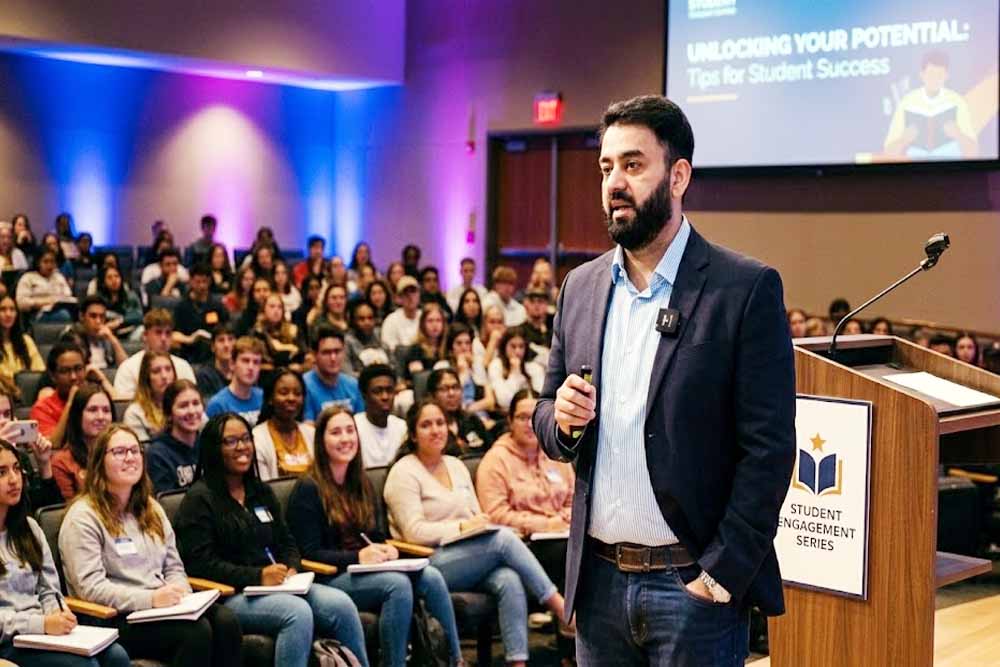
Not every motivational topic lands equally well with student audiences. Here is what I have seen create real engagement and real follow-through based on years of speaking in educational settings.
Career clarity and direction resonate deeply because most students, especially in their second and third years, are quietly terrified that they do not know what they want to do. A session that helps them think through how to find clarity — not by giving them a five-year plan, but by giving them a framework for making better short-term decisions — addresses a fear they carry constantly but rarely talk about.
Entrepreneurship and the startup mindset work well because students are naturally curious about building things. But the framing matters enormously. If the session is just a highlight reel of successful founders, it creates admiration without action. The sessions that produce real impact are the ones that talk about how to test an idea with no money, how to handle your first failure, and how to keep going when the environment around you is skeptical.
Digital skills and personal branding are increasingly relevant for student audiences. Students in 2026 are building their careers in a world where their online presence is part of their professional identity, whether they manage it intentionally or not. A session on how to build a credible LinkedIn presence, how to position yourself in a competitive job market, or how to use content creation as a career tool creates practical takeaways that students can implement the same week.
If you are running workshops for students thinking about their digital presence and professional authority, the principles covered in personal branding are directly applicable — the same frameworks that work for professionals work for students who want to enter the job market with a head start.
Mental resilience and handling pressure are topics that have become more important every year. Academic pressure, financial stress, family expectations, and the comparison anxiety that comes from living on social media — these are real and heavy for most students. A speaker who addresses these honestly, without being preachy or reducing everything to “just believe in yourself,” creates a genuine emotional connection and provides tools students actually need.
The Workshop Format: What Works Better Than a Long Speech
A one-hour speech to a student audience is not the most effective format for a workshop. The word “workshop” implies interaction, skill-building, and practice — not passive listening.
The formats I have seen work best for student workshops combine a shorter keynote with structured interactive segments. A 25-minute talk that introduces a central idea, followed by a facilitated discussion or small group exercise, followed by a Q&A where students can ask real questions — that three-part structure consistently outperforms a straight 60-minute presentation in terms of what students retain and apply.
If you are organizing a half-day or full-day workshop, build in multiple touchpoints. Different speakers or facilitators for different segments. A mix of content delivery and application exercises. Students who have to do something with information — write it down, discuss it with someone else, make a decision based on it — retain it at a far higher rate than students who only listen.
The physical setup matters too. Rows of chairs facing a stage work for a concert. For a workshop, U-shaped arrangements, round tables, or open floor setups where movement is possible create a very different psychological environment. Students who feel like participants rather than spectators engage at a different level.
Red Flags When Evaluating a Speaker for Your Event
Knowing what to avoid is as important as knowing what to look for.
A speaker who cannot tell you specifically what they will cover — who gives you vague language about “inspiring your students” without any content detail — is almost certainly delivering a generic session they have not customized for your audience. That is a warning sign.
A speaker who has never spoken at a student event before, regardless of their expertise in other contexts, carries real risk. Corporate speaking and student speaking require different skills. The ability to hold a boardroom is not automatically transferable to a room full of 20-year-olds with short attention spans and no professional context.
A speaker who does not ask you any questions before the event is not preparing anything specific for your audience. Good speakers are curious about who they are speaking to. If they are not asking, they are not customizing.
And a speaker whose entire portfolio is social media clips without any documentation of actual speaking engagements — no testimonials from event organizers, no evidence of post-event outcomes — is someone whose stage presence exists primarily on a phone screen, not in a live room.
What a Well-Run Student Workshop Actually Produces
When everything aligns — the right speaker, the right format, the right topic framing, and the right setup — student workshops produce outcomes that are measurable and lasting.
Students leave with a specific idea they want to test, a connection they want to make, or a habit they want to build. They talk about the session afterward — not just in the moment, but days later. The organizer gets messages. The department sees a shift in the energy of the cohort. Sometimes one person in that room makes a decision that changes their trajectory, and they trace it back to something they heard or felt in that session.
I have received messages months after speaking at student events from young people who started something, applied somewhere, or had a conversation they had been avoiding — because something in that session moved them to act. That is the real measure of a successful student workshop. Not the applause on the day. What happens in the weeks after?
The Speaker’s Responsibility to the Audience
I want to say something here that most speakers do not say publicly, because it does not exactly help with marketing.
A speaker at a student workshop is in a position of real influence. Students at that stage of life are in the process of forming beliefs about themselves, about what is possible, and about what the world expects of them. A speaker who exploits that receptivity to generate viral content or emotional peaks without substance is doing real damage — not dramatically, but quietly.
The responsibility of speaking to students is to be honest about difficulty alongside possibility, to share failure alongside success, and to leave people with tools rather than just feelings. The goal is not to make them feel amazing for an hour. The goal is to give them something they can use when things get hard — which they will.
That standard is what I hold myself to every time I accept a student engagement. And it is the standard I would encourage any organizer to hold their speakers to.
If you are building your own career in speaking and want your platform to carry this kind of credibility and weight, understanding how motivational speaking works as a professional practice — not just as an occasional activity — is an important part of that journey.
People Also Ask
How much does a motivational speaker for student workshops cost in Pakistan?
Speaker fees vary widely based on experience, the scope of the event, and whether the session is in-person or virtual. For student events specifically, many speakers offer academic pricing that is lower than corporate rates. The most important factor is not the fee — it is whether the speaker’s experience and approach match what your students actually need.
How long should a motivational speaker session be for a student workshop?
For student audiences, 30 to 45 minutes of core content with an interactive segment and Q&A is typically more effective than a straight 60 to 90-minute presentation. Attention and engagement drop sharply after 40 minutes without structured participation.
What topics work best for student motivational workshops?
Career clarity, entrepreneurship mindset, personal development, digital skills, and mental resilience consistently produce strong engagement. The best topic is the one most directly connected to the specific challenge your students are navigating right now.
How do I know if a speaker is right for a student audience specifically?
Ask them directly. Ask what they have spoken about at student events, what the outcomes were, and how they customize for a university or college audience. Their answer will tell you very quickly whether they have real experience in this space.
Can a virtual speaker work for student workshops?
Yes, but the format requires more deliberate design. Virtual sessions need shorter content blocks, more frequent interaction prompts, and a stronger facilitation structure to maintain engagement. A speaker experienced with virtual delivery will know how to handle this. One who is not will struggle.
Should I hire a local speaker or bring in someone from outside the city?
Local speakers carry cultural context that matters in student settings in Pakistan. A speaker from Lahore speaking to students in Karachi still brings a shared national context. What matters more than geography is whether the speaker understands the specific pressures, aspirations, and reference points of Pakistani students in 2026.
Final Thoughts
Hiring a motivational speaker for student workshops is not a checkbox activity. It is a real investment in the development of young people who are at a pivotal point in their lives.
The organizers who get the most out of these investments are the ones who are specific about what they want, thoughtful about who they hire, and intentional about the format they design. They treat the speaking slot as an intervention — a carefully chosen tool applied to a specific challenge — not as entertainment or a box to tick for the event agenda.
Students do not need to be told they are capable. Most of them already believe that, somewhere underneath the uncertainty. What they need is someone who can help them access that belief and give them the practical direction to act on it.
That is what a well-chosen speaker at a well-designed workshop can do. And that is worth getting right.
If you are planning a student workshop and want to talk through what kind of session would actually serve your audience — what topics, what format, what outcomes you can realistically aim for — let’s have that conversation.